Photo: SumUp via Unsplash
Scammers shop the holidays too. Black Friday and Cyber Monday bring record attention to online deals, and fake offers try to ride the same wave. This guide covers the most common tricks and a checklist you can use on every purchase. It focuses on habits rather than technology, because habits are what keep working.
The Most Common Holiday Scams
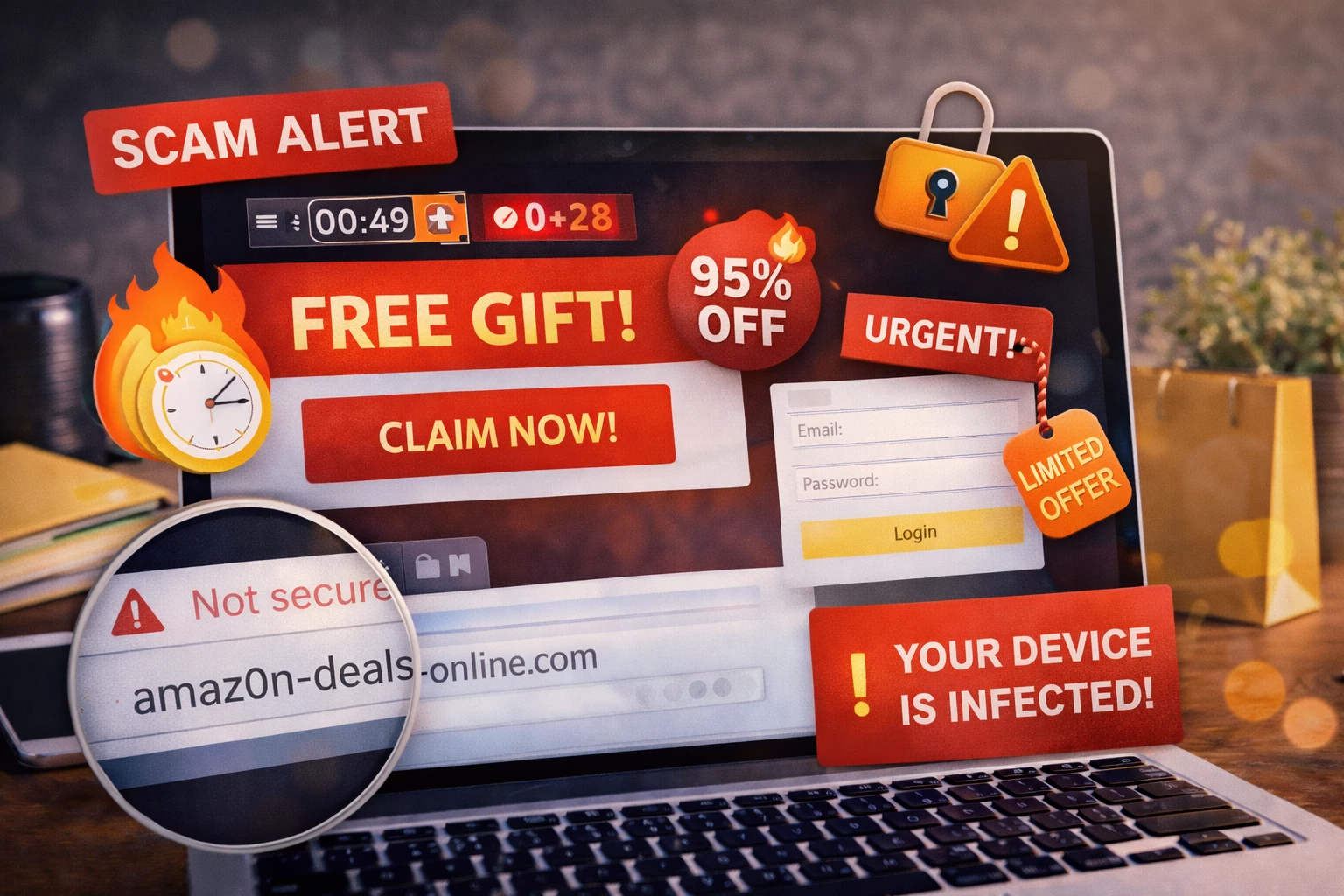
- Fake stores and copycat sites. A site that imitates a known brand, or an unfamiliar shop with prices far below everyone else's, may never ship anything.
- Phishing emails and texts. Messages that claim a problem with an order, an account or a delivery, and push you to click a link or enter a password.
- Fake package-tracking alerts. A "missed delivery" text with a link is a classic. If you are expecting a package, go to the carrier or retailer site directly.
- Social media ads for too-good-to-be-true deals. Ads can be placed by anyone. A flashy ad is not proof a store is real.
- Gift card requests. Anyone who insists you pay with gift cards is almost certainly a scammer. See our guide on whether discounted gift cards are safe.
- Fake coupon sites. Pages that claim to offer a huge code for personal information or a download are not a source of savings.
Check the Seller Before You Pay
Look at the web address carefully. A familiar name with an extra word, a swapped letter or an odd ending is a warning sign. Look for contact information, a physical address, a clear return policy and real customer reviews from outside the store's own site. If you only know the store from an ad, search for its name plus the word "reviews" before you buy.
Pay in a Way That Protects You
Credit cards generally offer stronger dispute protections than debit cards or bank transfers, and many payment services have buyer protection programs. Avoid paying by wire, cash app or gift card to a stranger. Consider a virtual card number if your card issuer offers one. Check your statements after the sales and report any unfamiliar charge quickly.
Protect Your Accounts
- Use a unique password for each shopping account, ideally with a password manager.
- Turn on two-factor authentication where it is offered.
- Do not shop on public Wi-Fi without a trusted connection.
- Keep your phone, browser and apps updated.
Be Careful With Links in Messages
If you get a message about a deal, an order or an account problem, do not use the link inside it. Open the retailer's app or type its address yourself. Our coupon code guide explains where real codes come from.
Use Our Store Pages for Real Offers
Our stores directory lists retailers and their current coupons, and our Black Friday and Cyber Monday page gathers live offers. If you are unsure about an offer, compare it using the checks in how to spot fake Black Friday discounts.
If Something Goes Wrong
- Contact your card issuer or payment service to dispute the charge.
- Change the password on any account you used, and on others that share it.
- Report the scam to the platform where you saw it, and to your national consumer protection agency.
- Keep screenshots and emails as evidence.
Frequently Asked Questions
Is it safe to shop online on Black Friday and Cyber Monday?
Yes, if you stay with known retailers, protect your accounts and pay with a protected method. See our Cyber Monday playbook for preparation tips.
How can I tell if a deal is too good to be true?
Compare the price at other stores, and use the checks in our fake-discount guide. A price far below every other store deserves caution.
Keep Reading: More Holiday Shopping Guides
- How to Spot Fake Black Friday Discounts: 8 Checks Before You Buy
- Black Friday 2026 Date, Cyber Monday 2026 Date and the Full Holiday Sales Calendar
- Cyber Monday 2026 Playbook: Plus Small Business Saturday and Giving Tuesday
- Are Discounted Gift Cards Actually Safe to Buy?
- Holiday Price Adjustments and Price Matching: How They Work and When to Ask
Ready to shop? Browse live offers on our Black Friday & Cyber Monday deals page, explore the stores directory for coupons, or compare prices with our price comparison tool.