Photo: rupixen via Unsplash
The Checks That Actually Matter
Fake retailer sites have gotten more convincing than they used to be — real-looking product photos, a working cart, sometimes even fake reviews stitched in. But the underlying tells haven't really changed, and running through them takes seconds once you know what you're looking for.
Start With the URL, Not the Homepage
Before anything else on the page, look at the address bar. Scammers rely on you not reading it closely:
- Near-miss spellings of a real brand — an extra letter, a swapped character, a hyphen where there shouldn't be one.
- Unusual domain extensions — a major retailer using something other than .com for its main storefront is a red flag, not a quirky rebrand.
- A brand name bolted onto a random domain — "official-nikestore-deals.shop" is not how real retailers register their sites.
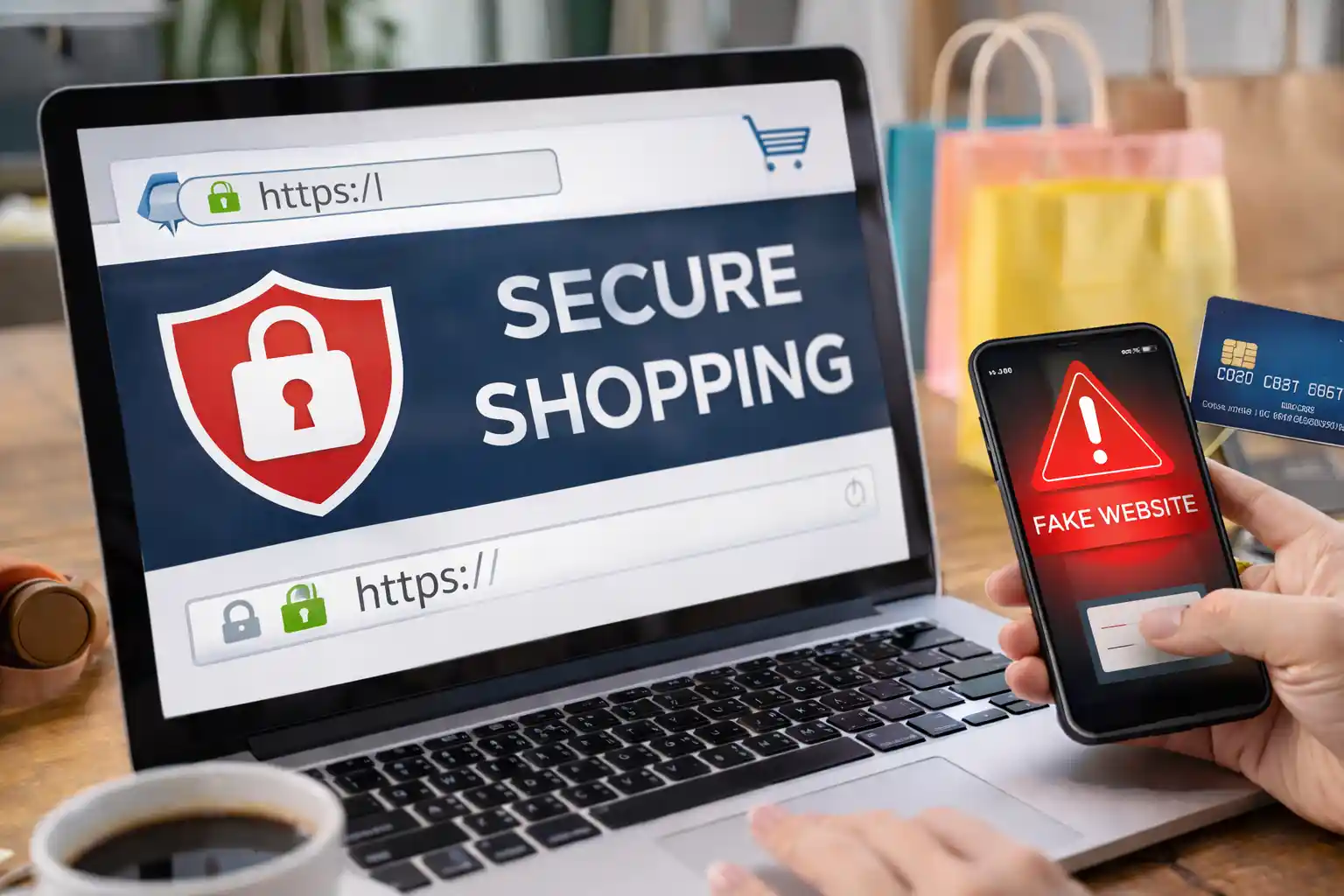
- No padlock or HTTPS — not a guarantee of legitimacy on its own, but its total absence on a checkout page is disqualifying.
Prices That Don't Make Sense Anywhere Else
A real discount shows up, in some form, across other retailers too — a sale everyone's running, a clearance that makes sense for the season. A price that's dramatically lower than every other store selling the identical item, with no explanation, is far more often bait than a genuine deal. If a quick search shows the same product listed nowhere near that price anywhere else, that gap is the site telling you something.
Artificial Urgency Is a Tactic, Not a Coincidence
Countdown timers, "only 2 left" banners that reset when you refresh the page, and pop-ups claiming someone in another city "just bought this" are all designed to get you to stop evaluating the site and just click buy. Real retailers use urgency too, but a fake one leans on it specifically because it doesn't want you to keep looking — the tactic is a stall against your own scrutiny, not a marketing flourish.
Check the Details a Real Store Can't Fake Cheaply
A handful of things are genuinely expensive or inconvenient for a scam site to fully replicate, which makes them reliable checks:
- A real return policy with specific terms — vague language like "returns accepted" with no timeframe or process is a shortcut, not an oversight.
- Contact information that actually works — a phone number that connects, or an email address that isn't a generic free provider tied to a supposedly established brand.
- A physical address that checks out — if one is listed at all, a quick search confirms whether it's a real business location.
- Consistent branding — logo quality, spelling, and tone that match the actual company, not a slightly-off version of it.
Payment Method Requests Are a Direct Tell
Legitimate retailers accept standard, reversible payment methods — credit cards, established payment processors. A site that only accepts wire transfer, direct bank transfer, cryptocurrency, or gift cards as payment for physical goods is standing up a red flag on its own, since none of those methods let you dispute or reverse a charge if the order never arrives.
When in Doubt, Search the Store Name Plus "Scam"
Before entering any payment information on a site you don't already know, a search for the store's name alongside words like "reviews," "scam," or "legit" takes a few seconds and often surfaces exactly what you need — either a pattern of complaints, or enough independent confirmation that the store is real to move forward with confidence.
The One-Sentence Version
If the URL looks slightly wrong, the price looks too good, and the site is rushing you to check out before you can think about it — that combination is the pattern, and it's consistent enough across fake retailer sites that trusting your hesitation is almost always the right call.