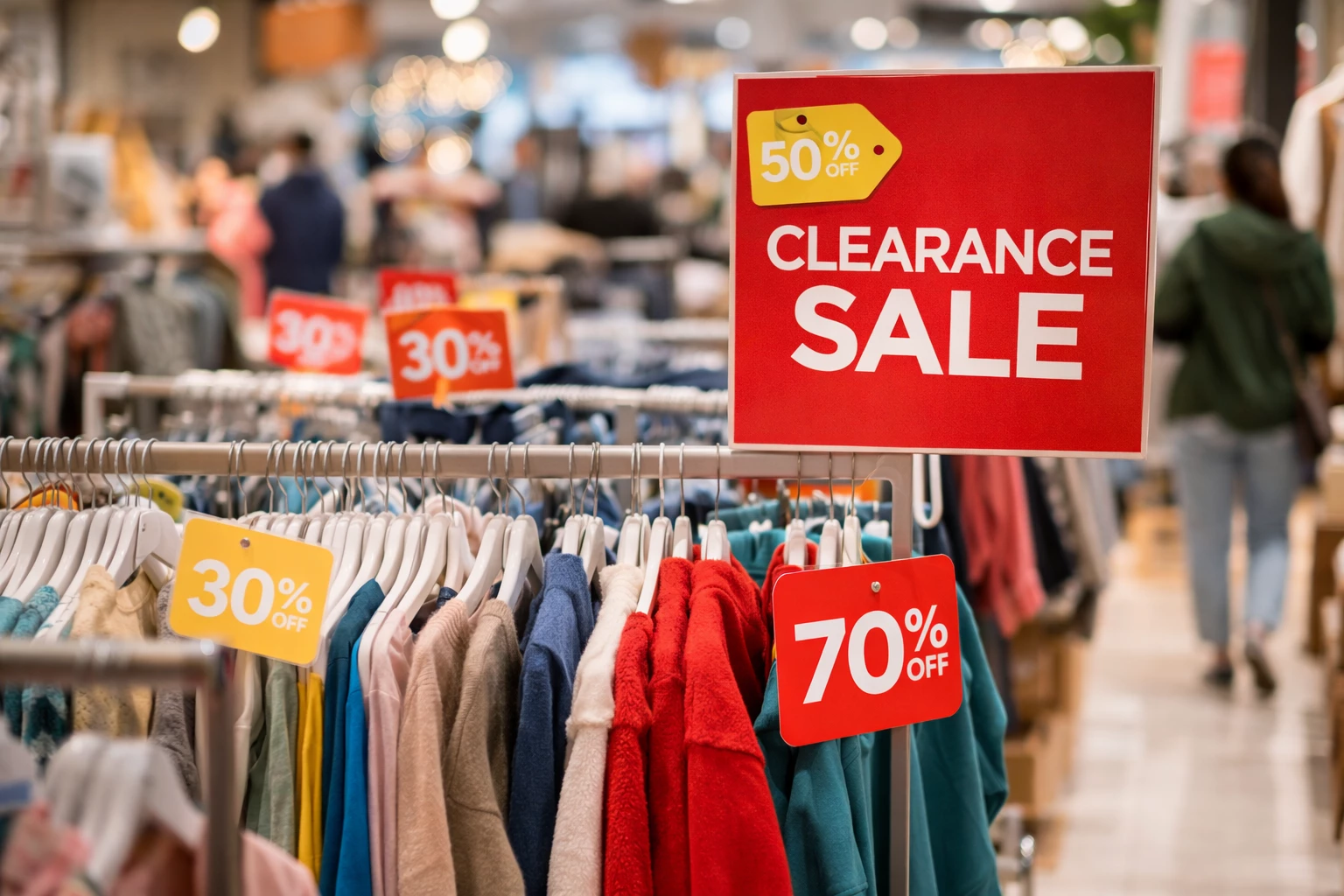
How Shrinkflation Hides Inside a "Sale" Price
A sale sticker on a familiar product doesn't guarantee you're actually paying less per ounce, per sheet, or per unit than you were a year ago — shrinkflation means the package sometimes got smaller well before the discount ever showed up, so the "deal" is really just a markdown on an already-reduced product. Manufacturers rarely announce a size cut the way they announce a price increase; a cereal box drops from 18 ounces to 15.4, a roll count quietly goes from 12 to 10, and the shelf price barely moves, which makes the per-unit cost increase almost invisible unless you're doing the math yourself. Layer a sale discount on top of a product that already shrank, and the percentage-off sticker is measuring the wrong baseline entirely — 20% off a package that's 15% smaller than it used to be isn't the win it appears to be. The unit price displayed on most grocery store shelf tags (price per ounce, per count, or per sheet) is the one number that cuts through this, since it's calculated off the actual current size rather than whatever number is printed in large font on the front of the box. Checking that single line, rather than the percentage-off sign above it, is the difference between comparing a real discount and comparing two different products that happen to look the same on the shelf.
TrackDownDeals
·
Sep 12, 2026